Fleet Builder Program · Q4 cohort · 4 seats · Next cohort opens JanuaryQ4 cohort · 4 seats left · Next opens January
Owner-operators running 2–10 trucks:

Build your fleet. I'll watch your back.

You've got the trucks and the freight. What you don't have is visibility, a driver who doesn't own you, and a safety record that survives growth. That's what we build. In 30 minutes I'll tell you straight whether I can.

Book a Fleet Builder call→
60 trucks at peak2× Inc. 5002,000+ operators in the community
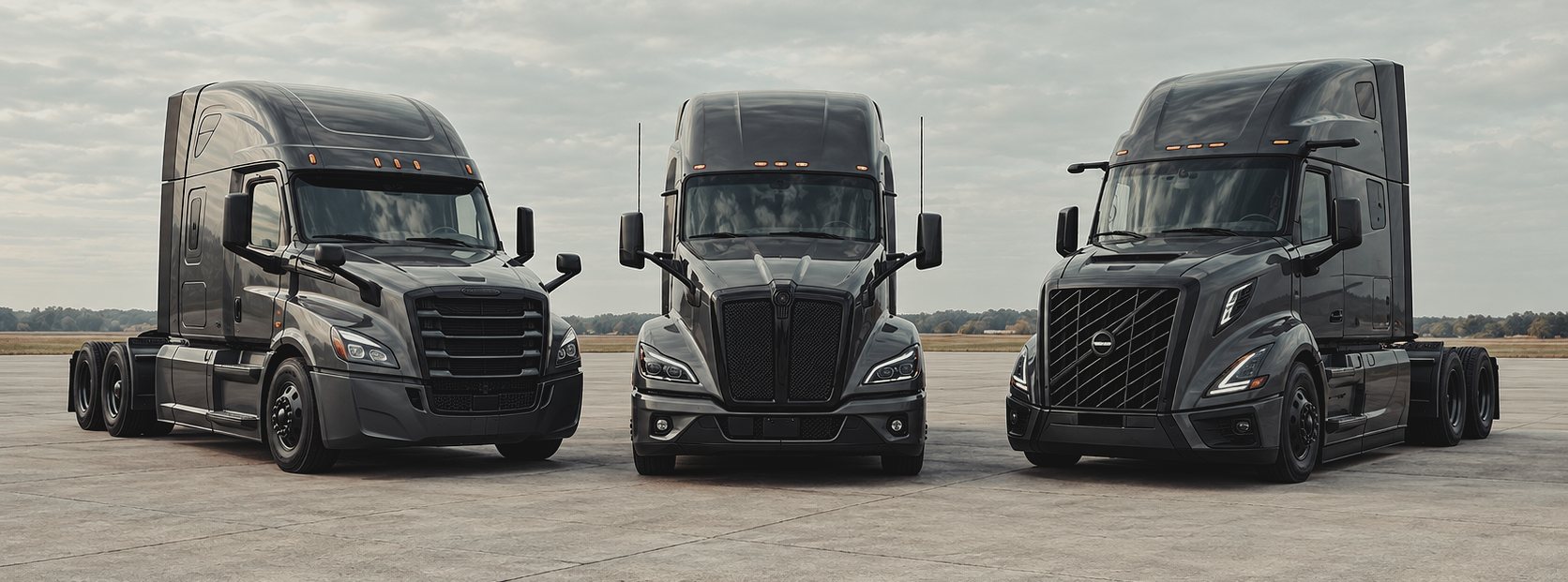
Three late-model sleeper tractors parked nose-out on a concrete lot
Grow the fleet. Keep the keys.
Sound familiar?

You're still the best driver in your company. That's the problem.

None of that means you're bad at this. It's what it looks like when a fleet outgrows the way it's run. You built a job that needs three trucks' worth of you. The next step is trimming the chaos so you can see the whole fleet and run it on purpose.

The model

A fleet runs on four systems.

At one truck, you are all four. At ten, each one either exists on paper or it's a fire you put out every week.

01

How you get freight

Lanes, brokers, direct shippers, rate floors. If every load starts on a load board, you don't have a freight system, you have a habit.

02

How you get and keep drivers

A bench, a pipeline, an onboarding that works without you. The fix for a driver who runs your company is a second driver who'd take his seat.

03

How trucks stay rolling

Maintenance on a schedule, inspections you pass on purpose, a CSA score you manage before it manages you. Safety is a growth system, not a cost center.

04

How the money works

Cost per mile you actually know. Cash that covers the next breakdown. Margin that shows up in your account, not just your P&L.

Inside the program

What we actually build together.

91%
of carriers run six trucks or fewer

Fewer than 1 in 10 carriers ever get past six trucks. It's not that the owners weren't good. They got to three or four, the chaos scaled faster than the revenue, and they stopped, or a bad year stopped them.

Getting to ten and staying there puts you in a small group. The ones who make it don't work harder than the ones who don't. They stopped being the system and built one.

Source: American Trucking Associations industry data, compiled from FMCSA carrier registrations. ATA is the trade association for large carriers; this figure is registration data, not a survey.

"I don't have time for a weekly call"

The owners who need this most almost didn't book.

I know. You're dispatching, driving, chasing a broker for a check, and the truck in the shop called twice. A weekly hour sounds like one more thing.

Here's the honest version: the hour is where you get the other ten back. The first thing we fix is whatever is eating your week. Usually it's a driver you're managing by hand or loads you're hunting one at a time. Every week after that, the call pays for itself before it ends.

If you genuinely can't find an hour, that's not a reason to skip the call. That's the problem we'd talk about on it.

Sebastian, founder of TruckingBusiness.com
Who's on the call

One truck to sixty. DOT-compliant the whole way.

I'm Sebastian. I started with one truck, built it to a 60-truck fleet, and made the Inc. 500 twice doing it. I never had a building full of staff. I had systems, and later, AI doing the work of departments.

Today I still run a fleet. That's the proving ground. Everything in the Fleet Builder Program is something I'm doing right now with my own trucks, not something I remember doing in 2015.

I also run the free TruckingBusiness.com community, 2,000+ operators, and coach a small group of owners one-on-one. That's where this program came from. The same five problems kept showing up at the same truck count.

A note from me.

The owner I built this for has 3 trucks, a driver he's afraid of, and a number in his head for what he'd be making if the company ran without him. He's been "about to add a fourth truck" for a year.

Matt runs 40. He told me the biggest shift wasn't a growth tactic. It was finding out that some of the trucks, drivers, and equipment he thought were driving growth were actually dragging down profit. That's a cost-per-mile conversation, and it happens in week one.

Eduardo runs 2 trucks, a Cascadia and a Volvo. We've worked through his rate per mile, a DPF plan at 430K miles, and when to ask his dispatcher for better lanes. He told me the biggest thing was learning from other owners' mistakes before making them himself. That's where the program starts.

The call is 30 minutes. I'll ask about your trucks, your drivers, your lanes, and your money. If I can move your numbers, I'll tell you how. If I can't, I'll tell you that too and point you somewhere useful. Either way we solve one real problem before we hang up.

SebastianFounder · TruckingBusiness.com
How it works

Call. Fit. First 90 days.

01

The call

30 minutes on Google Meet. Bring your last 3 months of settlements, your truck list, and your fuel and maintenance spend. We find the bottleneck.

02

The fit

If the program fits, I'll scope it on the call. Pricing is sized to your fleet, not a menu. If it doesn't fit, you still leave with the problem solved.

03

The first 90 days

Cost per mile, driver pipeline, maintenance schedule, first risk review. By day 90 you have a dashboard that shows you the whole fleet, a clear to-do list every week, and a lot less chaos. You are still the owner. You are just no longer the only system.

Is this you?

Built for owners at your stage.

Book the call if…

  • You run 2–10 trucks under your own authority.
  • You want net profit to go up, not just truck count.
  • You've got at least one driver you'd hate to lose.
  • You'd rather hear the risk now than find it in a renewal letter.

Don't book if…

  • You're still deciding whether to buy truck one.
  • You want someone to run the company for you.
  • You're looking for a cheaper driver, not a better operation.

4 seats this quarter. I take owners one at a time because the weekly call is me, not a team.

Pick a time. Bring your numbers.

Tue–Thu afternoons · 30 min · Google Meet. You'll get a confirmation and a short list of what to have ready.

Calendar not loading? Book your call here →

Don't take my word for it

From operators who actually did it.

★★★★★

"Some trucks, drivers, and equipment I thought were contributing to growth were actually dragging down overall profitability. That shift has been the biggest eye-opener."

Matt B.40-truck fleet operator
★★★★★

"You're not selling theory. You've actually built and sold a successful trucking company. Your advice comes from firsthand experience."

Matt B.40-truck fleet operator
★★★★★

"I learned from the common mistakes other owners made, buying an expensive truck, a year and model with issues, before I made them myself. When I started there was nothing like this. I still keep learning to this day."

Eduardo2 trucks · Owner-operator, Chicago

Results shared are from real members and clients and may not be typical. Nothing on this page is a guarantee of revenue, profit, or a specific outcome.

Questions owners ask before they book

Straight answers.

Who is this for?
Owner-operators with their own authority running 2 to 10 trucks who want to run the company instead of being run by it. If you're at one truck and deciding on the second, the call still makes sense. If you haven't bought truck one, start in the free community instead.
Is 2 trucks too small?
No. Two trucks is where the driver problem starts, because now you have one you can't personally cover. It's the cheapest point to build the systems. At six trucks you're fixing them under load.
What happens on the call?
30 minutes on Google Meet with me. I ask about your trucks, drivers, lanes, and money, and we work one real problem. If the program fits, I'll tell you what it would look like and what it costs for your fleet. If it doesn't, I'll say so.
How much time does the program take each week?
One hour on our call, plus whatever you'd already be spending putting out the fire we're replacing. Most owners get time back in the first month, usually from the driver or dispatch side.
Does it matter what I haul?
Dry van, reefer, flatbed, hotshot, local, OTR. The four systems are the same. The freight system is the one that changes most by lane, and that's built around yours.
What if my driver quits mid-program?
Then we're building the pipeline under pressure instead of ahead of it. It happens. That's exactly why the driver system comes early, and why you can reach me between calls.
How is this different from the free community?
The community is 2,000+ operators, Q&A, and training, and it's free. The Fleet Builder Program is me, weekly, on your fleet, with your numbers. One is a place to learn. This is someone watching your back while you build.
How much is it?
It's sized to your fleet and scoped on the call. I don't list a number because a 2-truck operation and a 9-truck operation aren't the same engagement. What I'll tell you up front: it's a monthly investment, and if the math on your fleet doesn't support it, I'll say so on the call rather than sell it to you.
4 seats this quarter

Ready to own a fleet instead of a job?

Thirty minutes. One real problem solved. Then you decide.

Book my Fleet Builder call→